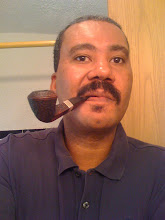
I briefly watched our President speak about the new tobacco law. I was surprised to learn that peer pressure wasn't the driving force behind teen smoking, as it was when I was a teenager. No, the driving force is advertising, combined with candy-flavored cigarettes that make smoking more accessible. I also learned that, unlike the traditional warning printed on cigarette boxes, which no one pays any attention to, the new graphic details of the effects of smoking that will be prominently pictured on the sides of the new cigarette packaging will be much more effective in scaring would-be smokers.
All sarcasm aside, I really wanted to talk about the new government health plan instead. First, it's a good indicator of how bad things are that people with health insurance are filing bankruptcy due to medical bills. I'll talk about an implication of that later. An even better indicator of how bad things are is that the very idea that the people who brought you Medicare can do a better job of providing health insurance than private industry is spoken in public with a straight face. What's even worse is that those people are most likely correct.
It will be interesting to see how this plays out. One thing I expect to happen is that the government health plan will come out at a much lower price point than the private plans, eventually choking them out. One thing I don't expect to see happen is a re-evaluation of the process and the underlying model of the body. But you never know. We could throw out the model of body as machine and replace it with the model of body as garden. We could question whether the patent-protected new drugs with horrific side effects are really worth the money we're spending on them. Or it may be more effective to daydream about winning the lottery and retiring in Hawaii.
Monday, June 22, 2009


Thursday, May 7, 2009
Bring Back the Double Edge
Continuing on the theme that sometimes the old ways really are best, today I want to talk about shaving, and specifically the double-edged razor. I started using a double-edged razor back in college in the late eighties on the recommendation of a roommate, who said I'd have fewer razor bumps. It was also cheaper, which was a big plus for a student. After college, I added a brush and soap to the process, also cheaper, but more time-consuming. After losing the razor holder in a move in the nineties, I went back to shaving cream and twin-blade razors.
Recently, after buying a new razor holder on Amazon, I decided to give the double edge another try. I'm here to tell you that it's even better than I remembered. The blades are cheaper, and the shave is much more comfortable, and my razor bumps have gone away. By the way, I don't know how long it takes stainless steel to rust, but plastic is estimated to take a thousand years to break down in landfills (not sure how they know that, however).
There are some things you need to know if you want to try it. First, the blades are extremely sharp and you'll have to put them in the holder by hand. Be careful, as you'll probably see the blood before you feel that you've been cut. Once in the holder, you don't have to worry about getting cut as much, but you still need to be careful. Next, a brush and soap isn't essential, but if you have the time for it, your patience will be rewarded. The most important thing is to use a light touch. Since there's only one blade, you won't cut all the way down to skin level on the first pass, so don't try. As long as you're patient, you can go over the same area two or three times without any irritation.
A good holder will cost you about twenty dollars; mine included ten blades. You can get the blades at Kroger or Meijer for under three dollars for a ten-pack. You can get the brush and soap with a little bowl for about ten dollars. At five to ten dollars for a five-pack of multi-blade razors, you'll break even in under six months. But the improved shaving experience will be more than worth it.
Recently, after buying a new razor holder on Amazon, I decided to give the double edge another try. I'm here to tell you that it's even better than I remembered. The blades are cheaper, and the shave is much more comfortable, and my razor bumps have gone away. By the way, I don't know how long it takes stainless steel to rust, but plastic is estimated to take a thousand years to break down in landfills (not sure how they know that, however).
There are some things you need to know if you want to try it. First, the blades are extremely sharp and you'll have to put them in the holder by hand. Be careful, as you'll probably see the blood before you feel that you've been cut. Once in the holder, you don't have to worry about getting cut as much, but you still need to be careful. Next, a brush and soap isn't essential, but if you have the time for it, your patience will be rewarded. The most important thing is to use a light touch. Since there's only one blade, you won't cut all the way down to skin level on the first pass, so don't try. As long as you're patient, you can go over the same area two or three times without any irritation.
A good holder will cost you about twenty dollars; mine included ten blades. You can get the blades at Kroger or Meijer for under three dollars for a ten-pack. You can get the brush and soap with a little bowl for about ten dollars. At five to ten dollars for a five-pack of multi-blade razors, you'll break even in under six months. But the improved shaving experience will be more than worth it.
Thursday, April 30, 2009
Bring Back Craftsmanship
The biggest current worry right now in my area is whether GM and Chrysler can survive the current recession. As we all know, it's not just the auto industry that's affected, and some are wondering if we aren't living through the second Great Depression. No one really knows for sure what's going to happen. We could get deflation, or rising national debt could send us into hyperinflation if not handled properly. Some of us even have the idea that the whole thing was built like a house of cards to begin with.
That's what I want to talk about today. Let's start with the auto industry. Obviously, the industry relies on people buying new cars. The problem is, people don't necessarily need new cars; they need reliable transportation, which can also be provided by a well-maintained used car. So steps are taken to encourage people to buy new cars they don't really need. Customers having extra money and available credit are just two of the cards in the foundation of the house of cards.
Now let's talk about the stock market. In theory, stock prices are based on things like P/E ratios, but in practice the biggest influence on prices is the ratio of people who want to buy to people who want to sell. The long-term upward trend that lasted up until about a year ago was therefore largely driven by incoming investments being larger that withdrawals, which turned out to be the load-bearing card of the lower layer.
Now let's move on to quality. A trip to the local supermarket, electronics store or auto dealer will put you in front of a variety of products, all of which are attractive-looking and have a base level of quality. The food is tasty and usually won't make you sick (at least not right away); the electronics are fast and flashy; the cars as well.
Closer examination reveals a different picture. Many of the food products have ingredients like MSG and corn syrup, which are thought by some to be harmful, and are in any case not as tasty as the ingredients they substitute for: in the case of MSG, more flavorful base ingredients, herbs and spices; in the case of corn syrup, cane sugar. The electronics and appliances generally work well, but they are often sold along with an extended warranty, almost as if the manufacturer expects them to break just after the normal warranty expires (this actually happened to me with a dryer). The situation with cars is similar, though a lot better than it used to be.
Now compare this to life before the Industrial Revolution. Food was all organically grown, and corn syrup, MSG and canola oil nonexistent. Tomatoes were eaten fresh only when they were harvested; the leftovers were canned. Metal tools were handcrafted. Houses were built with timber frames instead of two-by-fours with just enough wood to prevent the house from falling over.
I'm not suggesting, however, that we undo the Industrial Revolution and go back to hand-woven clothes and horse-drawn carriages. Instead, I put this question to you: how can we combine modern prosperity and medieval craftsmanship?
That's what I want to talk about today. Let's start with the auto industry. Obviously, the industry relies on people buying new cars. The problem is, people don't necessarily need new cars; they need reliable transportation, which can also be provided by a well-maintained used car. So steps are taken to encourage people to buy new cars they don't really need. Customers having extra money and available credit are just two of the cards in the foundation of the house of cards.
Now let's talk about the stock market. In theory, stock prices are based on things like P/E ratios, but in practice the biggest influence on prices is the ratio of people who want to buy to people who want to sell. The long-term upward trend that lasted up until about a year ago was therefore largely driven by incoming investments being larger that withdrawals, which turned out to be the load-bearing card of the lower layer.
Now let's move on to quality. A trip to the local supermarket, electronics store or auto dealer will put you in front of a variety of products, all of which are attractive-looking and have a base level of quality. The food is tasty and usually won't make you sick (at least not right away); the electronics are fast and flashy; the cars as well.
Closer examination reveals a different picture. Many of the food products have ingredients like MSG and corn syrup, which are thought by some to be harmful, and are in any case not as tasty as the ingredients they substitute for: in the case of MSG, more flavorful base ingredients, herbs and spices; in the case of corn syrup, cane sugar. The electronics and appliances generally work well, but they are often sold along with an extended warranty, almost as if the manufacturer expects them to break just after the normal warranty expires (this actually happened to me with a dryer). The situation with cars is similar, though a lot better than it used to be.
Now compare this to life before the Industrial Revolution. Food was all organically grown, and corn syrup, MSG and canola oil nonexistent. Tomatoes were eaten fresh only when they were harvested; the leftovers were canned. Metal tools were handcrafted. Houses were built with timber frames instead of two-by-fours with just enough wood to prevent the house from falling over.
I'm not suggesting, however, that we undo the Industrial Revolution and go back to hand-woven clothes and horse-drawn carriages. Instead, I put this question to you: how can we combine modern prosperity and medieval craftsmanship?
Friday, March 20, 2009
I Understand You're Tired, but a Tax Revolt's not the Right Answer
Don Cooper has a good post on LewRockwell.com expressing general disgust with government and recommending a tax revolt. I wholeheartedly agree with his sentiments, but a tax revolt is the wrong answer. Not because it wouldn't work, but because it addresses the problem at the wrong level. While it's true that government couldn't exist without our financial support, our ideological support is much more important. What's worse, we can see our money going to taxes (or at least some of it), but most of us have no idea that our beliefs and values are the foundation of government.
The primary question of politics is this: should decisions be made by individuals for themselves, or by a smaller group of individuals for everyone? Most people claim to believe the former, but when push comes to shove, invariably favor the latter. This is the core of the problem. Government exists and is powerful because we want it to exist and be powerful. Until we change our minds on this, tax revolt, "throw the bums out", etc., won't work.
There's also quite a bit of denial surrounding this issue. For example, some of us believe that everything would be O.K. if only we put everything back the way it was in the 50's. Others believe that everything would be all right if only we got the right people into office. Both groups of people really believe in government; they just disagree with the current implementation.
Really fixing things requires as a prerequisite withdrawing our beliefs and not just our tax dollars. If this is done, a tax revolt is irrelevant except that it may speed up things. If it is not done, a tax revolt is irrelevant at best.
The primary question of politics is this: should decisions be made by individuals for themselves, or by a smaller group of individuals for everyone? Most people claim to believe the former, but when push comes to shove, invariably favor the latter. This is the core of the problem. Government exists and is powerful because we want it to exist and be powerful. Until we change our minds on this, tax revolt, "throw the bums out", etc., won't work.
There's also quite a bit of denial surrounding this issue. For example, some of us believe that everything would be O.K. if only we put everything back the way it was in the 50's. Others believe that everything would be all right if only we got the right people into office. Both groups of people really believe in government; they just disagree with the current implementation.
Really fixing things requires as a prerequisite withdrawing our beliefs and not just our tax dollars. If this is done, a tax revolt is irrelevant except that it may speed up things. If it is not done, a tax revolt is irrelevant at best.
Saturday, March 7, 2009
Re: I'm not Joining the Strike
Brian Hurt recently made a post on Enfranchised Mind about the proposed refusal of internet authors to support candidates for office who aren't in favor of public campaign financing. He's against the "strike" for the obvious reason that it won't work, and seems to have a good understanding of the reason why: it's rather foolish to look for a solution to a problem from the people who created it in the first place.
The way I look at it, the first question that should be asked is: How prevalent is corruption in government? If it's just a small percentage of elected officials, the answer is to get rid of them. No finance reform necessary. If the problem is more pervasive, and a belief that it is is implied by the belief that campaign finance reform is needed, it won't work for the reason Mr. Hurt mentions: the solution will be implemented by people who are part of the problem. Any laws they pass will contain loopholes.
Mr. Hurt has a good answer to this dilemma. Everyone who blogs has a free press because they have a press. Decentralization of the media is absolutely a good thing.
However, there is a deeper problem. It's not just politicians who are corrupt. The system as it stands involves people voting themselves into other people's pockets. Anything government does beside set ground rules that apply equally to everyone, or provide infrastructure, inherently favors one group of people at the expense of others. This is corrupting by nature, and corrupts everyone involved. In the case of welfare-type provisions, the corruption is even worse because the people involved believe they're doing the right thing.
In the end, there's only one way to get money out of politics, and that's to get politics out of money.
The way I look at it, the first question that should be asked is: How prevalent is corruption in government? If it's just a small percentage of elected officials, the answer is to get rid of them. No finance reform necessary. If the problem is more pervasive, and a belief that it is is implied by the belief that campaign finance reform is needed, it won't work for the reason Mr. Hurt mentions: the solution will be implemented by people who are part of the problem. Any laws they pass will contain loopholes.
Mr. Hurt has a good answer to this dilemma. Everyone who blogs has a free press because they have a press. Decentralization of the media is absolutely a good thing.
However, there is a deeper problem. It's not just politicians who are corrupt. The system as it stands involves people voting themselves into other people's pockets. Anything government does beside set ground rules that apply equally to everyone, or provide infrastructure, inherently favors one group of people at the expense of others. This is corrupting by nature, and corrupts everyone involved. In the case of welfare-type provisions, the corruption is even worse because the people involved believe they're doing the right thing.
In the end, there's only one way to get money out of politics, and that's to get politics out of money.
Saturday, February 14, 2009
Gullible or Cynical?
The title of this post links to an article by Paul Hein on lewrockwell.com about the current economic situation and what's being done about it. Mr. Hein has an idea about the situation which has also occurred to me, although in a different context:
That idea may appeal to the "tinfoil hat" crowd, but after thinking about it, I realized that the failed policies could be explained without conspiracy theory. Ideology alone was sufficient to explain everything. People can be controlled far more effectively with ideology that anything else, because they think that whatever they do as a result is their own idea. Also, because most people would rather be right than solve their problems, ideology insulates people from the effects of opposing evidence. If you don't believe this, try pointing out to a fundamentalist Christian that there are two conflicting Noah's Ark stories in the Bible. Or try mentioning to a climate-change believer that Greenland was warm enough to support farming in the Middle Ages.
Of course, all of this isn't to say that there isn't a conspiracy. There may be, but even if there is, it's really ideology that's running the show.
Moreover, the Keynesian idea of stimulating the economy via government spending is not new. It’s been tried before; it never works. Doesn’t the current generation of whiz kids know this? Do they never talk to anyone save themselves?I suspected the same type of thing at the inception of the Iraq war. I noticed that our current enemies were people we had supported in the past, and noticed a trend. I concluded that if our leaders consistently pursued policies that led to results that were the opposite of their stated goals, then they must have a different set of real goals.
An answer presents itself to me, and I should probably keep mum about it, but I won’t. Here goes: the powers that be WANT the economy to fail. Why? That’s a good question, but I can only speculate about the answer. What is clear, however, is that economic collapse seems guaranteed if the stimulus package is implemented, and those advocating it must surely know it.
That idea may appeal to the "tinfoil hat" crowd, but after thinking about it, I realized that the failed policies could be explained without conspiracy theory. Ideology alone was sufficient to explain everything. People can be controlled far more effectively with ideology that anything else, because they think that whatever they do as a result is their own idea. Also, because most people would rather be right than solve their problems, ideology insulates people from the effects of opposing evidence. If you don't believe this, try pointing out to a fundamentalist Christian that there are two conflicting Noah's Ark stories in the Bible. Or try mentioning to a climate-change believer that Greenland was warm enough to support farming in the Middle Ages.
Of course, all of this isn't to say that there isn't a conspiracy. There may be, but even if there is, it's really ideology that's running the show.
Monday, February 2, 2009
Paved with Good Intentions
It has been a very common belief among liberals that if only we could get the right people into office, everything would get better. Now that Obama, who by consensus is "the right person," is in the White House, we'll get to find out if that belief is true. If the new equal pay law is any indicator, the answer is "No."
On the surface, the law seems like a good idea. Why should men get paid more than women for doing the same job? It is a good intention, but there are a couple of problems with it. The first law of economics is that people respond to incentives. So let's look at some incentives.
At a typical company, some of the workers are very dedicated. They care about their job, learn as much as they can about the business, and go the extra mile to make sure the job gets done right. Other workers, on the other hand, just want to get paid and do just enough and just well enough not to get fired. In a perfect situation, the dedicated worker gets paid more than the slacker, and gender has nothing to do with it. In real life, sometimes there are discrepancies, and if this new law gets strictly enforced, some companies who happen to have skewed pay distributions for whatever reason will face fines and/or lawsuits. Some other companies will see this happen and decide that it's easier and safer to just pay everyone the same for the same job, with maybe some allowance for length of time worked and education. So the dedicated worker will get the same pay as the slacker and both will know it. The only way for the dedicated worker to be rewarded is to seek a job at another company with a higher pay scale. So now we have different companies with different pay scales, and there's bound to be some uneven distributions here too. The next step, if government really wants to pursue the matter, is to set pay rates by profession. Now some bureaucrat in Washington is deciding what you get paid, and ability and dedication have nothing to do with it. Is that what you want? And what happens to productivity among the dedicated workers who can't move up to the next pay scale at another company?
Next problem: laws are enacted congressmen with good intentions (let's be generous), but implemented and enforced by a different set of people. The people implementing and enforcing the laws don't necessarily have the same intentions. And, as you have seen from the example above, intentions can't always be implemented because people have the annoying habit of pursuing their own best interest to the extent allowed. It's not a "slippery slope," it's just unintended consequences.
So what's the answer? Well, if women are really paid less than men for the same work, they should be in greater demand from a profit and loss standpoint, and the discrepancy will be corrected by employers who naturally want to get the best employees for the least amount of money. The answer is to ask the question: what is it that stops this from happening?
On the surface, the law seems like a good idea. Why should men get paid more than women for doing the same job? It is a good intention, but there are a couple of problems with it. The first law of economics is that people respond to incentives. So let's look at some incentives.
At a typical company, some of the workers are very dedicated. They care about their job, learn as much as they can about the business, and go the extra mile to make sure the job gets done right. Other workers, on the other hand, just want to get paid and do just enough and just well enough not to get fired. In a perfect situation, the dedicated worker gets paid more than the slacker, and gender has nothing to do with it. In real life, sometimes there are discrepancies, and if this new law gets strictly enforced, some companies who happen to have skewed pay distributions for whatever reason will face fines and/or lawsuits. Some other companies will see this happen and decide that it's easier and safer to just pay everyone the same for the same job, with maybe some allowance for length of time worked and education. So the dedicated worker will get the same pay as the slacker and both will know it. The only way for the dedicated worker to be rewarded is to seek a job at another company with a higher pay scale. So now we have different companies with different pay scales, and there's bound to be some uneven distributions here too. The next step, if government really wants to pursue the matter, is to set pay rates by profession. Now some bureaucrat in Washington is deciding what you get paid, and ability and dedication have nothing to do with it. Is that what you want? And what happens to productivity among the dedicated workers who can't move up to the next pay scale at another company?
Next problem: laws are enacted congressmen with good intentions (let's be generous), but implemented and enforced by a different set of people. The people implementing and enforcing the laws don't necessarily have the same intentions. And, as you have seen from the example above, intentions can't always be implemented because people have the annoying habit of pursuing their own best interest to the extent allowed. It's not a "slippery slope," it's just unintended consequences.
So what's the answer? Well, if women are really paid less than men for the same work, they should be in greater demand from a profit and loss standpoint, and the discrepancy will be corrected by employers who naturally want to get the best employees for the least amount of money. The answer is to ask the question: what is it that stops this from happening?
Subscribe to:
Posts (Atom)

 Posts
Posts